AI in Corporate IT: How to Distinguish Real Benefits from Marketing Hype
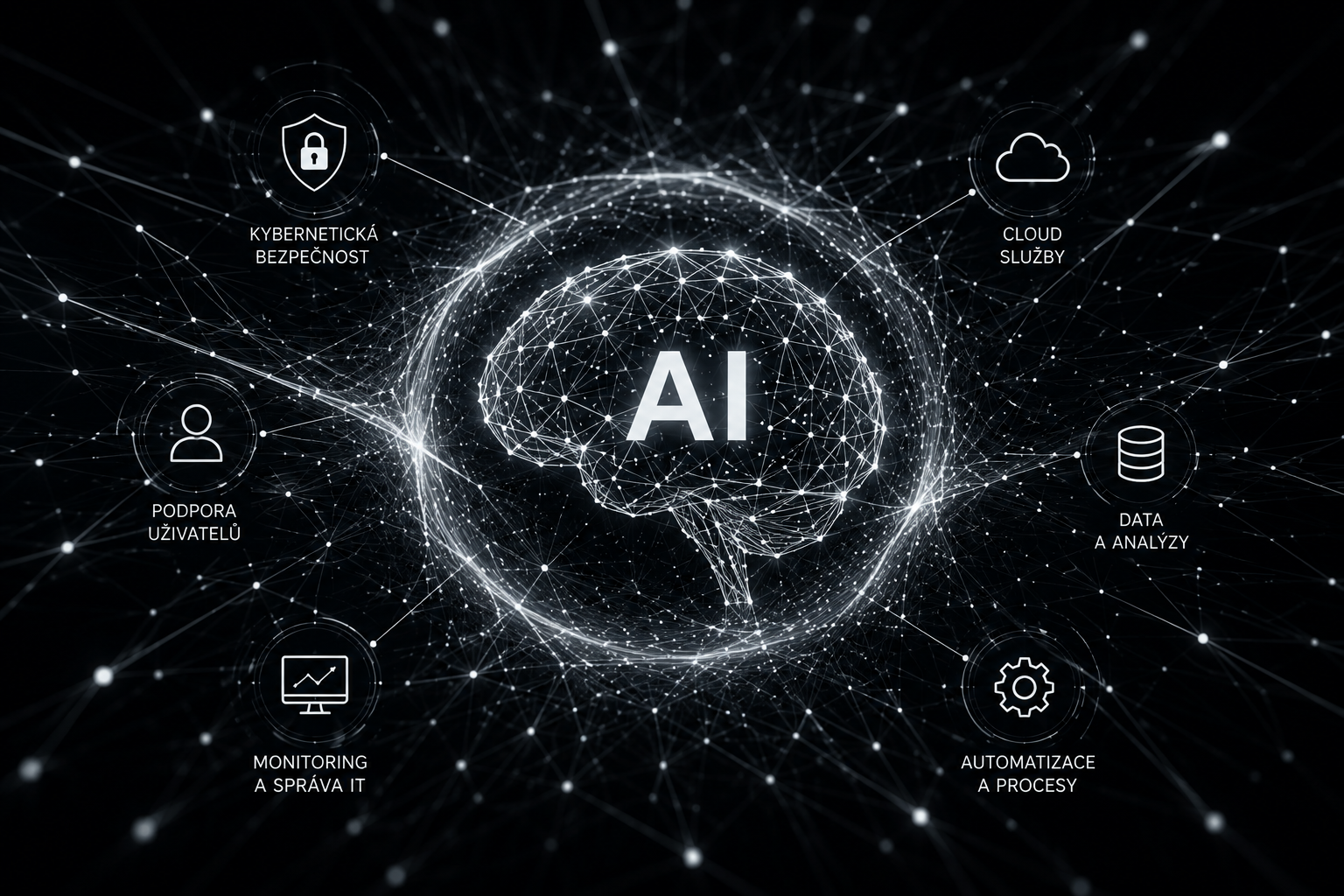
Artificial intelligence is one of the most talked-about topics in the tech world today . Just open a tech magazine, attend a conference, or check out what tech companies are offering, and AI is practically everywhere. It seems as if no modern product could exist without it anymore. It’s no wonder, then, that many companies are asking themselves if they’ve fallen behind the times. But this is exactly where it’s good to slow down for a moment.
Over the past twenty years, we have experienced several waves of technological change in the world of ICT. Virtualization, the cloud, and digitization all promised to revolutionize the way businesses operate. And although they all brought about fundamental changes, the real benefits only materialized once organizations understood how to use them to their advantage—not because these technologies were new, but because they solved specific problems. The same is true of artificial intelligence.
AI is not a goal. It is a means to an end.
Many organizations today are figuring out how to implement AI as quickly as possible. But a much more important question is where it can actually help. The technology itself does not create any value. It only brings value when it simplifies work, improves safety, or helps people make better decisions.
In practice, we most often encounter two approaches. The first is driven by enthusiasm. A company purchases a new tool simply because it incorporates AI, without knowing exactly what problem it’s supposed to solve. The second approach is based on real needs. The organization first identifies an area where there is room for improvement or where employees spend an unnecessary amount of time on routine tasks, and only then considers whether artificial intelligence can bring about meaningful change in that specific area .
In our view, it is the second approach that makes the most sense in the long run. AI should not be the goal of the project. It should be a tool that helps people work more efficiently and helps companies make better use of the technologies they have already invested in.
Where AI Really Helps
If we look at companies that are successfully using AI today, we find several areas where its benefits are clearly evident. This is particularly evident in cybersecurity, for example. Modern security systems process a massive volume of events that humans simply cannot evaluate on an ongoing basis. Artificial intelligence can flag unusual behavior, uncover connections between individual incidents, or help security analysts more quickly determine which alerts pose a real risk. It does not replace experts, but it allows them to devote more time to situations where their expertise is irreplaceable.
It works similarly when it comes to infrastructure management. A modern IT environment consists of dozens of interconnected systems, cloud services, network components, and applications. Each of these generates a vast amount of operational data. AI can continuously analyze this data, identify patterns, and flag emerging issues before they affect users or business operations. This allows IT teams to respond proactively, rather than having to deal with the consequences of outages.
AI also plays a significant role in supporting employees and working with company data. A well-designed assistant can find information in internal documentation within seconds, help with routine requests, or prepare materials to support management decision-making. In all these cases, however, one common rule applies— AI is not a substitute for people. It is a tool that allows them to focus on work with higher added value.
When You Should Be on Your Guard
Precisely because AI has become such a hot marketing topic, it’s a good idea to maintain a healthy sense of perspective. These days, you’ll find the label “AI-powered” on nearly every other product, but it’s not always clear what value it actually brings.
Before making any investment, a company should therefore ask itself a few simple questions. What specific problem do we want to solve? How will we know that the new solution has delivered the expected benefits? What data will the AI use, and how will it be protected? And above all—do we really need artificial intelligence, or is there an easier way?
Experience shows that it is precisely these questions that often determine whether a project will be successful or remain just another technological experiment.
The greatest value lies in connection
When we talk to our customers today, they rarely focus solely on AI. Much more often, we discuss how to integrate infrastructure, cloud services, cybersecurity, data, applications, and modern tools so that they function as a single, cohesive whole. And this is precisely where we see the greatest benefit of artificial intelligence. On its own, it won’t solve problems. If individual technologies don’t work together, no AI tool can save the day. Only when it’s part of a well-thought-out architecture can it reach its full potential.
Conclusion
Artificial intelligence is undoubtedly changing the way companies manage their IT environments. However, it is not an end in itself, nor is it a universal solution to all problems. The organizations that derive the greatest value from AI are not those that deploy it the fastest. Rather, they are those that can thoughtfully integrate it into their ICT strategy and connect it with other technologies.
At Integriq, we believe that the future of enterprise IT does not depend on who has the most new tools. It depends on who can integrate them in such a way that, together, they create a secure, efficient, and sustainable environment. That is why, when designing a solution, we always start by asking what problem we want to help the customer solve. Only then do we select the technologies that truly make sense for that purpose.